From the CGHRSA Board President:
I’ve had the pleasure to work with some truly stellar team members at ALSE Tech in the past 17+ years, Andrew ‘Willy’ Wilson is one of them. His professionalism and determination to ‘get it right’ greatly contributes to making our equipment, meaning all of our flight gear, PPE and rescue equipment the best in any military aviation community.
Willy is always one to listen before speaking, so I’ve learned to listen to what he says, and I’m careful to answer his questions as clearly as possible when he’s working in an unfamiliar area of our work.So we’re fortunate to have him at ALSE Tech. When I asked him to write a short article for our blog, he reflected on some of the things that have been critical during his operational career, (which hasn’t ended yet.) If your RS number is bigger than 765 and your still at it, you’ll benefit from what he has to say. Thank you, Willy, for doing this for us.
{DIVIDER {}}
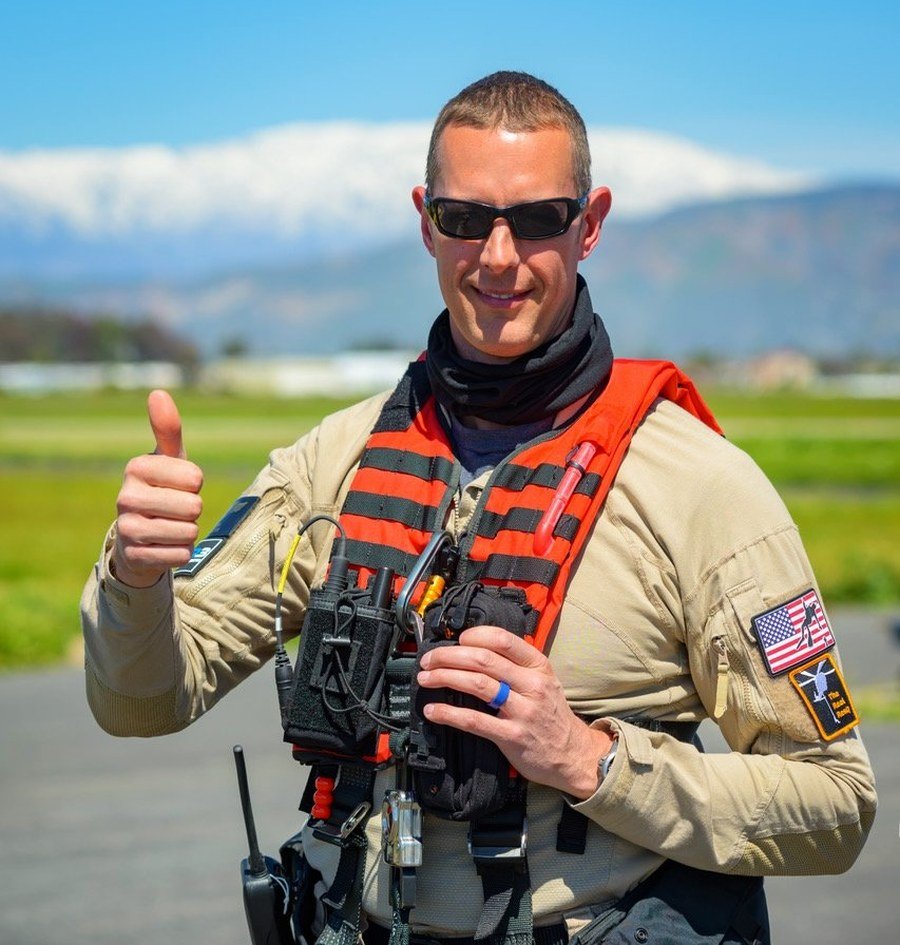
AST1 Andrew Wilson, 40 years old from Placentia, CA. Enlisted September 2007.
First unit was TRACEN Cape May, NJ Water Safety Instructor teaching recruits how to swim.
Airman Program at USCG Air Sta Atlantic City, NJ (Sept – Dec 2008).
AST A-School, Class 73-09 (Jan – May 2009).
Operational Units
Port Angeles, WA (2009–2013)
Houston, TX (2013–2018)
Savannah, GA (2018–2022)
USCG ALC / ALSE Tech Services (2022–Present) – still standing duty, augmenting the E-City shop.
I’ve been fortunate to have had some unique cases in my career –from inland mountain rescues in Port Angeles, WA, to sinking sailboats 150 miles off Cape Hatteras, NC, to sweating through Hurricane Harvey while stationed in Houston, 2017.
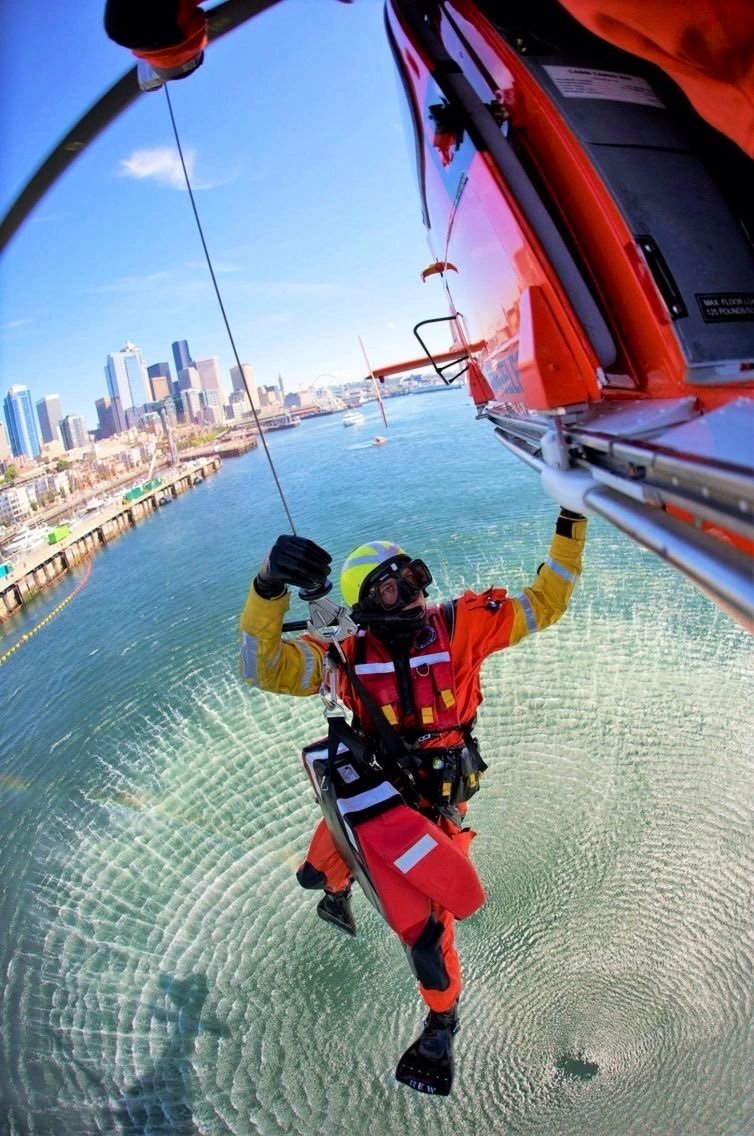
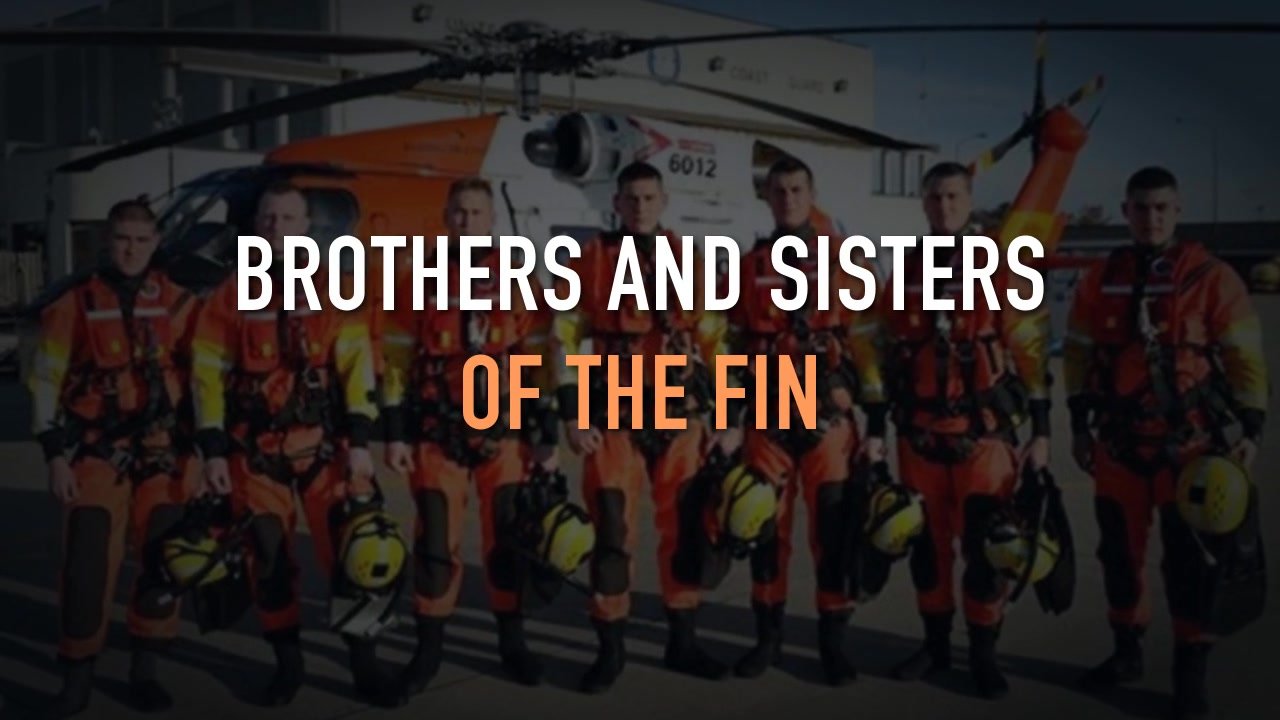
As helicopter rescue swimmers, we pride ourselves on leaving the relative safety of the aircraft and descending alone into the unknown. We think on our feet, improvise, adapt, and overcome challenges that would terrify most people. That’s what makes us unique in the military. We prioritize, execute, and bring calm to chaos. But we must never forget how we got there.
We imagine a big red “S” on our chests, but we’re nothing, without the maintainers, pilots and flight mechanics who take us to work. We’re a small cog in the machine. Often, we become the face of a rescue, overshadowing the aircrew. But we can’t forget that those folks up front and, in the back, must quickly orchestrate a response for their part in the challenging aspects of every search and rescue case. They position us to do our job – and most importantly, they get us and the survivor's home.
I’ve been fortunate to fly with some of the best in the business, CDR Scott Sanborn (retired) was one of them. I was a young AST3 in Port Angeles the first time I crawled into his aircraft. We flew together in Houston later in our careers. I was a Flight Examiner and member of the EFEB and he was my OPS boss. When he arrived, he recognized the need to develop inland SAR and urban/hurricane response skills – learned from his time in Port Angeles.
Together with CDR Sanborn, ASTC Matt Thiessen (retired as ASTCS), and our outstanding FEB/EFEB team in Houston, we developed an urban/hurricane SAR response syllabus. We hoisted with the Houston Fire Department using their facilities to practice vertical surfaces and unique hoisting platforms – everything from compact vehicles to rail cars. We also learned roof entry procedures and safety protocols.
Only a small percentage of pilots and flight mechanics can attend Advanced Helicopter Rescue School, located in Astoria, so this relatively new and specialized training was vital.
All duty standing pilots, flight mechanic and rescue swimmers at Air Station Houston were trained to respond effectively and efficiently to urban Search and Rescue, and two years later, Hurricane Harvey would put that training to the test.
Because CDR Sanborn and our command were forward-thinking enough to recognize training shortfalls and take action to fix them, the Air Station Houston crew’s performance, especially during the first few days of the Hurricane Harvey response, was exceptional. (Side story for another time, Sanborn also flew into a Lowe’s parking lot in Webster, TX to pick me up at the kick off of the hurricane ops – I tell that story better after a few glasses of Scotch.)
CDR Sanborn challenged us to think outside the box, push hard in training, and become better – to be comfortable being uncomfortable. That is the best kind of leadership. Preparing your people for the dark day you hope never comes, but when it does, they respond with confidence.
And as for flight mechanics – we all have our favorites. The ones who, when you see them in duty brief, you know you’re in good hands. Mechanics who can thread the needle and get the hook to your hand exactly when you need it. They’re our lifeline to aircraft, and when they’re trained, experienced and confident, you feel ten feet tall.
In closing, we're all fortunate to have been – or continue to be – USCG Helicopter Rescue Swimmers. Many of us, maybe most of us, have done and seen some hard things. Because of what can be demanded of us, we’ve pushed ourselves to maintain readiness, suffered injuries and setbacks, all to be ready to save lives. However, we can’t forget the professionals in the cockpit or at the hoist pennant who get us there, each time, on time, to get our fins in the water, or feet on the ground. They rarely receive the limelight or recognition they deserve.
So, the next time you see a rescue swimmer featured in the media, by some talking head who doesn’t understand the highest level of teamwork and training that go into each rescue, and the risk incurred by each team member, remember the folks who got that swimmer in position to get the job done.
Lastly, in the recent tragic flooding events in Texas, the USCG was well represented by the actions and leadership of RS# 1096, AST3 Scott Ruskan.
His professionalism, humility, and recognition of his crew are something to aspire to. Well done, Scott.
Very Respectfully,
AST1 Andrew “Willy” Wilson / RS #765
USCG Helicopter Rescue Swimmer /ALSE Tech Services Subject Matter Specialist




Social hub
Follow the association, then follow the units still doing the work. Every account below opens on its own platform.
Latest from the fleet
Coast Guard accounts we follow
CGHRSA is an independent 501(c)(3) nonprofit. It is not part of, and is not endorsed by, the U.S. Coast Guard. Following an account is not an endorsement by either side.